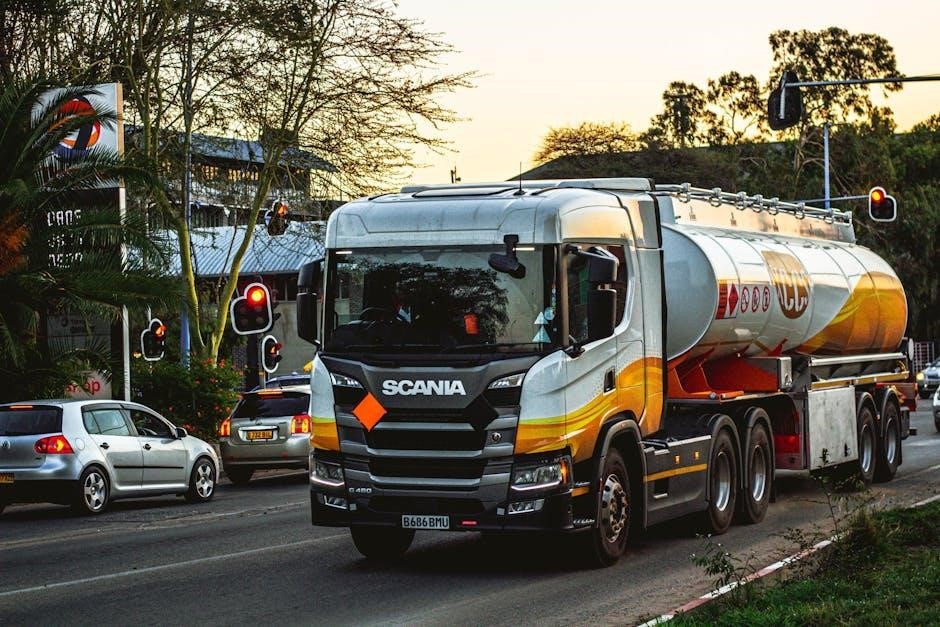
Texas Tanker Endorsement Study Guide: An Overview
Navigating Texas’s tanker endorsement demands thorough preparation! This guide details requirements, testing, regulations, and resources for commercial drivers seeking this crucial qualification.
The Texas Tanker (N) endorsement is a critical addition to a Commercial Driver’s License (CDL), authorizing operation of vehicles designed to transport liquids or gases in bulk within tanks exceeding 1,000-gallon capacity. Obtaining this endorsement signifies specialized training and understanding of the unique challenges associated with handling these potentially hazardous materials.
It’s not merely a license extension; it’s a demonstration of competency in safe loading, unloading, and transportation practices. Drivers must pass a dedicated knowledge test, proving their grasp of relevant regulations and operational procedures.
Why Obtain a Tanker Endorsement in Texas?
Securing a Texas tanker endorsement dramatically expands career opportunities within the transportation sector, particularly in the state’s robust oil and gas industry. This endorsement unlocks positions transporting fuels, chemicals, and other essential commodities. Increased earning potential is a significant benefit, as tanker drivers often command higher wages due to the specialized skills required. Furthermore, it demonstrates a commitment to safety and professionalism, making drivers highly sought after by employers.
Eligibility Requirements for the Texas Tanker Endorsement
To qualify, applicants must be 18+, possess a valid Texas CDL, and meet residency/documentation standards as outlined by the DPS.
Age Requirements
Texas mandates a minimum age of 18 years to obtain a tanker endorsement on a Commercial Driver’s License (CDL). This aligns with federal regulations governing interstate commerce and the operation of large vehicles. Individuals under 18 are ineligible, regardless of possessing a valid CDL. This age restriction ensures drivers have sufficient maturity and experience to handle the responsibilities associated with transporting potentially hazardous liquids or gases in tank vehicles, prioritizing public safety on Texas roadways. Meeting this age criterion is the first step towards endorsement eligibility.
Valid CDL Requirement
A current and valid Texas Commercial Driver’s License (CDL) is a prerequisite for applying for a tanker endorsement. You cannot pursue the tanker endorsement without first holding a CDL in good standing. The CDL must be appropriate for the type of commercial vehicle you intend to operate with the tanker endorsement. Any suspensions or revocations on your CDL will disqualify you from obtaining the endorsement, emphasizing the importance of maintaining a clean driving record and adhering to all traffic laws.
Residency and Documentation
To secure a Texas tanker endorsement, proof of residency is essential. Acceptable documentation includes a valid Texas driver’s license or identification card displaying your current address. You’ll also need to present a U.S. passport or evidence of legal residential status. Ensure all documents are original or certified copies; photocopies are generally not accepted. Accurate and complete documentation streamlines the application process, avoiding potential delays or denials.
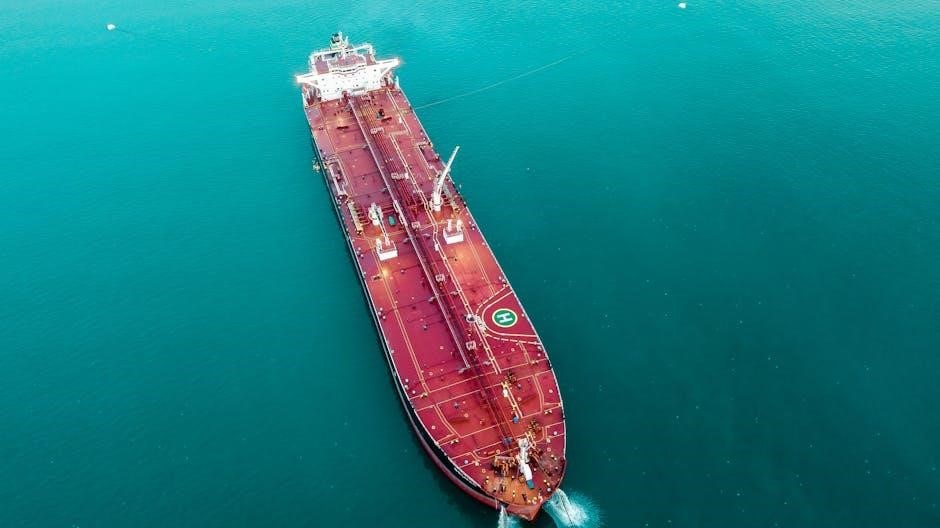
Understanding Tanker Vehicle Definitions
Texas defines a tank vehicle as carrying 1,000+ gallons of liquid or gas. Understanding capacity limits and vehicle types is vital for endorsement compliance.
What Constitutes a Tank Vehicle?
In Texas, a “tank vehicle” is specifically defined as any commercial motor vehicle designed to transport liquids or gaseous materials in a permanently mounted tank. This tank must have an individual rated capacity exceeding 1,000 gallons. Vehicles meeting this criteria necessitate a tanker endorsement on the Commercial Driver’s License (CDL).
Importantly, this definition encompasses not only traditional tanker trucks but also portable tanks permanently affixed to a chassis. Understanding this precise definition is crucial for drivers to determine if a tanker endorsement is required for their specific operation, ensuring full compliance with Texas Department of Public Safety (DPS) regulations.
Capacity Limits for Tanker Endorsement
The Texas tanker endorsement applies to any tank vehicle with a single compartment capacity exceeding 1,000 gallons. This threshold is critical; vehicles below this limit generally do not require the endorsement. However, the aggregate capacity of multiple compartments is considered.
Therefore, a vehicle with several smaller tanks, collectively holding over 1,000 gallons, will necessitate a tanker endorsement. Drivers must accurately assess their vehicle’s capacity to ensure legal and safe operation within Texas regulations, avoiding potential penalties.
Types of Liquids and Gases Covered
The Texas tanker endorsement encompasses a broad range of transported substances. This includes liquids like gasoline, diesel fuel, chemicals, and water, as well as compressed gases such as propane and anhydrous ammonia. The endorsement isn’t limited to hazardous materials; it covers all liquids and gases in bulk tank quantities.
Understanding this broad scope is vital for drivers. Regardless of the substance’s hazard classification, operating a tank vehicle exceeding the capacity limit requires the appropriate endorsement, ensuring compliance with Texas regulations.
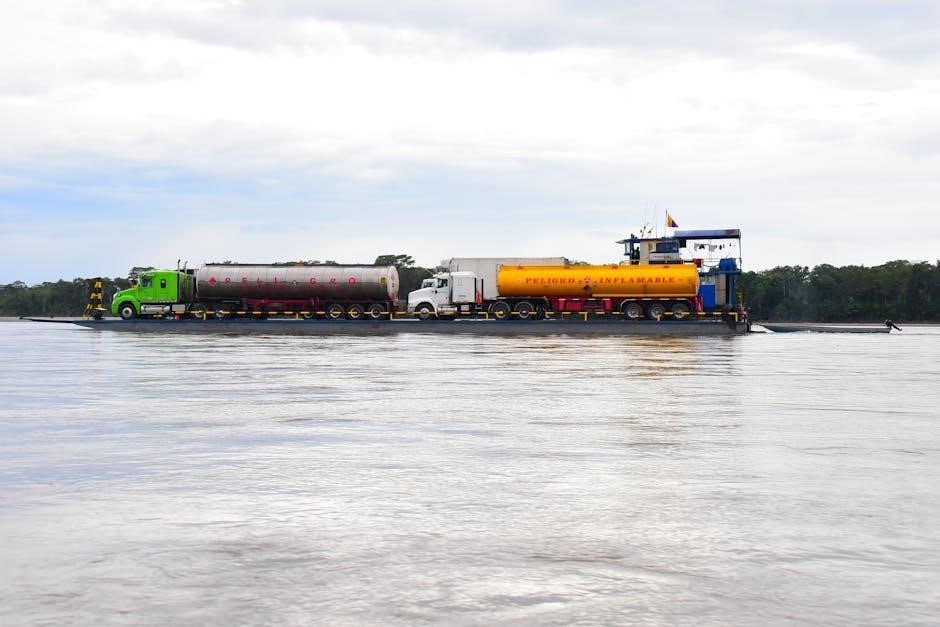
The Texas Tanker Endorsement Knowledge Test
The test assesses competency in tanker-specific knowledge. It includes general CDL questions, combination vehicle specifics, and dedicated tanker operation principles for safe transport.
General Knowledge Section
This foundational section covers essential CDL principles. Expect questions on traffic laws, safe driving practices, space management, and hazard perception applicable to all commercial vehicles. Understanding regulations regarding hours of service, vehicle inspections, and accident procedures is crucial. Mastering these basics provides a solid base for tackling tanker-specific challenges. Thorough review of the Texas DPS Driver Handbook is highly recommended, focusing on core commercial driving concepts to ensure a strong performance on this initial test component.
Combination Vehicles Section
This section assesses your understanding of operating tractor-trailer combinations. Expect questions on coupling and uncoupling procedures, proper use of mirrors, and managing the vehicle’s length and weight. Knowledge of braking systems, turning techniques, and off-tracking is vital. Mastering these skills ensures safe handling of combined vehicles, especially when hauling liquids or gases. Reviewing the Texas DPS manual’s combination vehicle chapter is essential for success, focusing on stability and control principles.
Tanker-Specific Knowledge
This portion focuses solely on the unique challenges of tanker operation. Expect questions regarding surge and sway effects, center of gravity shifts, and proper braking techniques for loaded and unloaded tankers. Understanding baffle functions, loading/unloading procedures, and emergency response protocols is crucial. The test will assess your ability to anticipate and mitigate risks associated with liquid and gas transport, ensuring safe handling and preventing accidents. Thorough study of tanker-specific materials is key.
Hazardous Materials Knowledge (If Applicable)
If transporting hazardous materials, additional knowledge is essential. This section covers hazard classes, proper placarding, shipping papers, and emergency response guidelines. Background checks and TSA security threat assessments are mandatory prerequisites. Familiarize yourself with emergency contact information and spill containment procedures. Understanding regulations regarding hazardous substances is paramount for safe transport and compliance with federal and state laws, ensuring public safety and environmental protection.
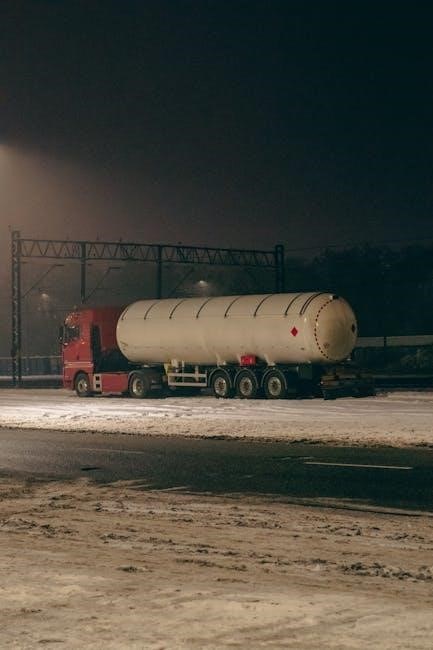
Key Concepts for the Tanker Knowledge Test
Mastering center of gravity, surge/sway, and braking is vital! Understand loading procedures and how these factors impact tanker vehicle stability and control.
Center of Gravity and Stability
Understanding a tanker’s center of gravity is paramount for safe operation. Liquid movement dramatically alters this point, impacting stability, especially during turns and braking. A higher center of gravity increases rollover risk. Drivers must comprehend how load distribution—full versus partially loaded tanks—affects stability.
Proper loading techniques, avoiding sudden maneuvers, and maintaining appropriate speeds are crucial. Recognizing the effects of liquid surge and sway on the vehicle’s balance is also essential for preventing accidents and ensuring a controlled driving experience.
Surge and Sway Effects
Tanker vehicles exhibit unique handling characteristics due to liquid movement—surge and sway. Surge is the forward and backward sloshing of liquid, while sway refers to side-to-side movement. These effects amplify during acceleration, deceleration, and turns, altering vehicle stability.
Drivers must anticipate these forces and adjust braking and steering accordingly. Increased stopping distances are common. Smooth, gradual control inputs are vital to counteract surge and sway, preventing loss of control and maintaining safe operation, particularly on highways.
Braking Techniques for Tanker Vehicles
Braking a tanker requires significant adjustment due to the vehicle’s weight and liquid load. Anticipate stops well in advance and apply brakes smoothly and progressively. Avoid sudden, forceful braking, which can cause surge, skidding, and potential loss of control.
Reduce speed before entering curves or downhill grades. Utilize engine braking when appropriate. Be aware that stopping distances are considerably longer with a full tanker; maintain increased following distances for safety.
Loading and Unloading Procedures
Safe loading and unloading are paramount when operating tanker vehicles in Texas. Always follow established facility procedures and ensure proper grounding to prevent static electricity buildup, especially with flammable liquids.
Inspect hoses and connections for leaks before, during, and after transfer. Monitor tank levels closely and avoid overfilling. Secure the vehicle during unloading to prevent movement, and adhere to all applicable environmental regulations regarding spills.
Hazardous Materials Endorsement & Tanker Endorsement – The Connection
A Hazmat endorsement is often needed with a Tanker endorsement. Background checks and TSA requirements are crucial for transporting hazardous materials in Texas.
Background Checks and Security Threat Assessments
Securing a Hazmat endorsement, frequently paired with the Tanker endorsement, necessitates rigorous scrutiny. The Transportation Security Administration (TSA) mandates comprehensive background checks, delving into criminal history and security threat assessments. These evaluations aim to identify potential risks associated with individuals handling hazardous materials.
Applicants must undergo fingerprinting and submit to a review of their records against watchlists. A clean record isn’t always sufficient; the TSA assesses the totality of circumstances. Successful completion of these checks is a prerequisite for obtaining the Hazmat endorsement, and therefore, fully legally operating tanker vehicles carrying such substances in Texas.
TSA Requirements for Hazmat Endorsement
The TSA’s stringent requirements for the Hazardous Materials (Hazmat) endorsement are critical for tanker drivers. These include a Security Threat Assessment, involving a thorough background check utilizing fingerprints submitted through a designated enrollment center. Applicants must also complete a formal application and pay associated fees.
Ongoing monitoring is also part of the process. The TSA continuously reviews information to ensure drivers remain eligible. Failure to comply with these regulations, or discovery of disqualifying information, can lead to revocation of the Hazmat endorsement, impacting tanker operation legality.
Practical Skills and Road Testing
Successful completion requires demonstrating pre-trip inspection mastery, safe driving techniques, and proper emergency response procedures specific to tanker vehicles.
Pre-Trip Inspection Procedures
A meticulous pre-trip inspection is paramount for tanker vehicles in Texas. Drivers must systematically examine all critical components, including the tank itself, valves, hoses, and emergency equipment. Thoroughly check for leaks, damage, and secure connections. Inspect braking systems, tires, and lights, ensuring everything functions correctly. Documentation of the inspection is crucial, verifying a safe operating condition before each trip. This detailed process minimizes risks and ensures compliance with Texas DPS regulations, safeguarding both the driver and the public.
Safe Driving Practices for Tanker Vehicles
Operating a tanker vehicle requires specialized driving techniques in Texas. Maintain a slower speed, especially on curves and during braking, to mitigate surge and sway effects. Increase following distance significantly to allow for extended stopping distances. Be acutely aware of the vehicle’s height and weight, avoiding low clearances and steep grades. Smooth, gradual maneuvers are essential; avoid sudden starts, stops, and sharp turns. Prioritize defensive driving and constant vigilance to ensure a safe journey.
Emergency Procedures
Texas tanker drivers must be prepared for emergencies; Know procedures for leaks, spills, and rollovers, prioritizing safety and environmental protection. Immediately notify emergency services and the National Response Center. Secure the scene, preventing further hazards. Understand proper containment and cleanup protocols, adhering to regulatory guidelines. Maintain updated emergency contact information and spill response plans. Regular drills and training are crucial for effective response, minimizing damage and ensuring public safety.
Specific Texas Regulations for Tanker Vehicles
Texas DPS enforces strict rules for tanker vehicles. These cover weight limits, permits, safety inspections, and operational requirements to ensure highway safety.
Texas Department of Public Safety (DPS) Rules
The Texas DPS establishes comprehensive regulations governing tanker vehicle operation. These rules encompass pre-trip inspection protocols, securement of cargo, and adherence to speed limits specifically designed for tankers. Drivers must demonstrate proficiency in these areas during road tests.
Furthermore, DPS mandates compliance with federal hazardous materials regulations when applicable, including proper placarding and emergency response procedures. Regular updates to these rules are published on the DPS website, ensuring drivers remain informed about current legal requirements for safe tanker transport within Texas.
Weight Restrictions and Permits
Texas imposes strict weight restrictions on tanker vehicles to protect roadways and bridges. Exceeding these limits necessitates obtaining special permits from the Texas Department of Transportation (TxDOT). Permit requirements vary based on the type of cargo, vehicle configuration, and route traveled.
Drivers must understand axle weight limits and overall gross vehicle weight restrictions. Failure to comply can result in hefty fines and operational delays. TxDOT provides online resources detailing permit applications and weight restriction maps.
Common Mistakes to Avoid on the Tanker Endorsement Test
Many drivers struggle with center of gravity calculations and proper braking techniques. Thoroughly review these concepts to avoid common errors during the Texas exam!
Misunderstanding Center of Gravity
A frequent error involves a poor grasp of how liquids shift within a tanker, dramatically altering the vehicle’s center of gravity; Drivers often underestimate the impact of surge and sway, leading to instability, especially during turns or braking. Incorrectly calculating the load’s effect on the center of gravity can result in rollovers.
Remember, a full tanker isn’t simply a heavier load; it’s a dynamically shifting weight. Practice problems focusing on load distribution and its influence on stability are crucial for success on the Texas tanker endorsement test. Understanding this concept is paramount for safe operation.
Incorrect Braking Techniques
A common mistake is applying brakes too sharply with a tanker, causing surge and potential loss of control. Tankers require earlier and smoother braking than standard vehicles due to the momentum of the liquid load. Drivers must understand anti-lock braking systems (ABS) and their limitations in this context.
Failing to anticipate stops and adjust braking accordingly is a significant error. Practice emergency braking procedures in a controlled environment to develop the necessary skills. Proper technique prevents load shifting and maintains vehicle stability during deceleration.

Resources for Studying and Preparation
Texas DPS handbooks, commercial driving schools, and online practice tests are vital for success! Utilize these tools to master tanker endorsement knowledge effectively;
Texas DPS Driver Handbook
The Texas Department of Public Safety (DPS) Driver Handbook is your foundational resource. It comprehensively covers all aspects of commercial driving, including specific sections dedicated to tanker endorsements. Carefully review the chapters on combination vehicles, air brakes, and hazardous materials – even if you aren’t pursuing a hazmat endorsement, the principles overlap.
Pay close attention to the sections detailing safe operating procedures for tank vehicles, focusing on the unique challenges presented by liquid and gas loads. The handbook provides essential information on stability, surge, and braking techniques. Download the latest version directly from the DPS website for the most current regulations and guidelines.
Commercial Driving Schools
Enrolling in a Texas-approved commercial driving school offers structured tanker endorsement training. These schools provide both classroom instruction and behind-the-wheel practice, crucial for mastering the skills needed to safely operate tank vehicles. Experienced instructors will guide you through the knowledge test material and prepare you for the practical road exam.
Look for schools with specialized tanker courses that cover topics like load securement, surge control, and emergency procedures. They often offer practice tests mirroring the DPS exam, boosting your confidence. Research school reputations and pass rates before committing to a program.
Online Practice Tests
Utilizing online practice tests is a valuable supplement to your Texas tanker endorsement studies. Numerous websites offer realistic simulations of the official DPS knowledge exam, allowing you to assess your understanding of key concepts and identify areas needing improvement. These tests often include detailed explanations for both correct and incorrect answers.
Focus on tests specifically tailored to the Texas tanker endorsement, as regulations can vary by state. Consistent practice builds familiarity with the question format and reduces test-day anxiety, ultimately increasing your chances of success.
Tanker Endorsement Application Process in Texas
Completing the Texas DPS application, providing required documentation, and paying associated fees are key steps to obtaining your tanker endorsement successfully.
Completing the Application Form
The Texas Department of Public Safety (DPS) provides the necessary application form, typically available online or at DPS offices. Drivers must accurately fill out all sections, including personal details, driving history, and endorsement requests. Ensure all information aligns with official documentation like your CDL and identification. Double-check for errors before submission, as inaccuracies can cause delays. The form requires attestation to meeting eligibility criteria and understanding associated responsibilities. Properly completed forms are crucial for a smooth application process, initiating the next steps toward tanker endorsement approval.
Required Documentation
Submitting a complete application necessitates several documents. A valid Texas Commercial Driver’s License (CDL) is paramount, alongside proof of age – a birth certificate or passport suffices. Applicants must present documentation verifying U.S. residency or legal status. The completed application form itself is essential, alongside any supporting documents requested by the DPS. Be prepared to provide your Social Security card and potentially a driving record. Ensure all copies are clear and legible to avoid processing delays; original documents may be required for verification.
Fees and Payment Options
Applying for a Texas tanker endorsement involves associated fees. Currently, expect costs for the knowledge test and the actual endorsement addition to your CDL. The Texas Department of Public Safety (DPS) accepts various payment methods, including cash, certified checks, money orders, and credit/debit cards (Visa, Mastercard, Discover). Online applications may offer additional electronic payment options. Fee amounts are subject to change, so verifying the current rates on the DPS website is crucial before submitting your application.
Maintaining Your Tanker Endorsement
Continued validity requires periodic renewal and maintaining a current medical certification. Adherence to Texas DPS regulations is essential for ongoing compliance.
Renewal Requirements
To renew your Texas tanker endorsement, you must first possess a currently valid Commercial Driver’s License (CDL). Renewal cycles align with your CDL’s expiration date, typically every five years. The process involves verifying your driving record remains clean, free of disqualifying offenses.
You’ll need to fulfill all standard CDL renewal requirements, including providing proof of identity and residency. Importantly, a re-examination of tanker-specific knowledge isn’t always required at renewal, but the DPS reserves the right to mandate it. Staying updated on regulatory changes is crucial for seamless renewal.
Medical Certification
Maintaining a valid medical certificate is paramount for your Texas tanker endorsement. Commercial drivers operating tanker vehicles require a valid Medical Examiner’s Certificate, demonstrating physical and mental fitness. This certification, obtained from a certified Medical Examiner listed on the FMCSA National Registry, is crucial.
The type of certificate—DOT physical—depends on your driving operation. Ensure your medical card accurately reflects your driving duties. Expired medical certifications immediately invalidate your CDL and tanker endorsement, halting legal operation. Regular medical evaluations are essential for continued compliance.
Frequently Asked Questions (FAQs)
Common concerns about the Texas tanker endorsement are addressed here! We clarify test retakes, endorsement validity, and essential details for commercial drivers.
What if I fail the tanker endorsement test?
Don’t be discouraged! Failing the Texas tanker endorsement knowledge test isn’t the end of the road. You are permitted to retake the test, but there’s a waiting period. Typically, you must wait at least 30 days before retesting. Utilize this time to thoroughly review the areas where you struggled, focusing on the Texas DPS Driver Handbook and practice exams.
Consider revisiting commercial driving schools for targeted assistance or utilizing online resources to reinforce your understanding of tanker-specific concepts. Preparation is key to success on your subsequent attempt!
How long is the tanker endorsement valid for?
The Texas tanker endorsement mirrors the validity of your Commercial Driver’s License (CDL). Generally, a Texas CDL, and consequently its endorsements like the tanker endorsement, is valid for five years. However, this duration is contingent upon maintaining a clean driving record and fulfilling all renewal requirements set forth by the Texas Department of Public Safety (DPS).
Regular medical certification is also crucial for continued endorsement validity, ensuring drivers meet physical qualifications.
Future Trends in Tanker Transportation Regulations
Evolving federal and state laws may impact tanker transport. Expect potential changes concerning safety technologies, environmental concerns, and security protocols for Texas drivers.
Potential Changes to Federal and State Laws
Anticipate evolving regulations impacting Texas tanker endorsements. Federal initiatives focusing on enhanced safety technologies, like advanced braking systems and real-time monitoring, could become mandatory. State laws may align with federal updates or introduce stricter requirements regarding driver training and vehicle maintenance. Increased scrutiny of hazardous materials transport, driven by security concerns, is also probable.
Furthermore, environmental regulations concerning emissions and spill prevention are likely to become more stringent, potentially necessitating specialized equipment or operational procedures for tanker vehicles operating within Texas. Staying informed about these changes is crucial for maintaining compliance and ensuring safe operations.